Showing posts with label Sri Lankan. Show all posts

Sunday, April 28, 2013

Delicious Dosas!


This is a post that has taken ages to finally get on the blog.  As difficult as it has been to get posted is as easy as they are to make. Dosas are a uniquely Indian flatbread and come in many flavors and combinations of rice and lentils - some thick and the size of pancakes and some crepe thin, crispy and larger than dinner plates. These dosas are made by soaking and grinding rice and lentils into a smooth batter and then fermenting the batter to give it a delicious tang - a bit like sourdough bread. This makes them a good starting point for traditional fermented foods. I like to make them this time of  year when my kitchen is warmer and fermenting is quicker.

Several years ago I was part of an online health board and one of my board-mates was a lovely Indian woman named Sangeetha. When she learned that I love Sri Lankan and Indian food she asked if I had ever made dosas before and proceeded to teach me by email. She taught me a plain version and one her kids called pizza dosas. Today's post is the plain version and I'll post the pizza dosas soon.

While the process is super simple you need to plan in advance because you'll soak for one day and ferment overnight. You can see that I'm soaking the rice and lentils in separate jars and each jar has a pinch of fennugeek seeds. The jars look a bit cloudy but the rice and lentils were each rinsed very well.

The lentils look almost white yet they are called black gram dal or urad dal and can be found in every Indian or Asian market in our area. You can use any lentil, only the color will really be affected.

After twelve hours the jars are rinsed with fresh water and left for another twelve hours.  At this point some of the water is drained and it's time to grind the soaked rice and lentils. I have used a regular blender, an immersion blender and my Vitamix. The Vitamix obviously grinds faster, but all will work. You'll need enough water in the jar to keep the mixture liquid - like a thick cream or pancake batter.
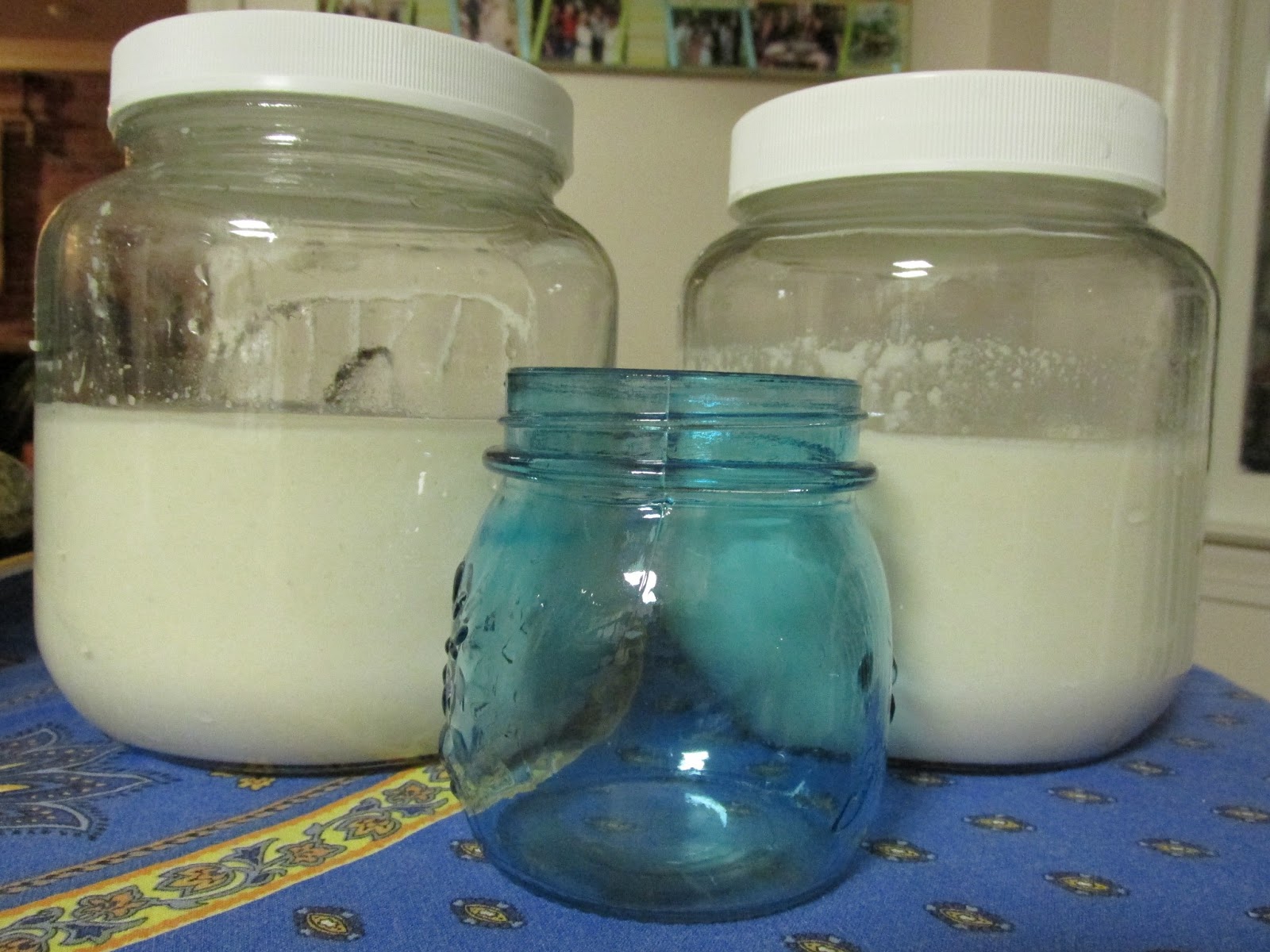
Once the mixture is blended, pour it back into clean jars and put the lid(s) on loosely. I've put the blue jar between the two jars just to give you perspective on the fermentation. You can see the batter is almost as high as the blue jar here. I set the jar out about 9:00 p.m. on Friday.


Here's what it looked like by mid-day Saturday. You can see the batter is naturally fermenting and has grown considerably. You can also see air bubbles throughout the jars letting you know the fermentation is complete.

Do keep an eye on your jars as they start to expand, as they can easily bubble up over the top!

Next step is to add a bit of salt and get cooking! One key ingredient is your cooking oil. I only use coconut oil for cooking my dosas. In fact, it's the most used oil in my kitchen.

The pan you use is very important. A stainless steel skillet will get sticky no matter how much oil you use. I don't have non-stick pans because I'm concerned about the chemicals leeching into our food. The only pan I use for dosas (and making tortillas) is my cast iron pan. A well seasoned cast iron pan is better than any non-stick pan I've ever used.

Delicious Dosas

Ingredients:
1 cup Rice - I use Organic Basmati
1 cup Lentils - I use Urad Dal or split Black Gram Lentils
Pinch of Fennugeek seeds
Sea Salt - added after fermenting
Coconut Oil for frying

Using one jar for the rice and one jar for the lentils, pour each into their separate jars and rinse thoroughly under running water being careful to not let the rice or lentils flow out of the jars as you pour off excess water. When the water runs clear fill each jar with filtered water and let sit 10 to 12 hours with lids on.

Rinse and refill each jar, put the lids back on and let sit for another 10 to 12 hours.

Now that the jars have sat out nearly a full day you can start your batter. Pour off some excess water, leaving the water level just about even with the rice and lentils. I actually doubled the recipe in the photos above so I couldn't fit both jars into my blender at once but you should have no problem doing so. My Vitamix plows through the mixture quickly but you may need a bit more water if you're blender is having trouble mixing the rice and lentils into a batter.

Just like a pancake batter is thicker than a crepe batter the thickness of your dosa batter will affect the thickness of the cooked dosa. I have better results with a pancake consistency.

Now put your batter back into the clean jar(s), put the lid on and give it some time to ferment and get bubbly. I put my jars out about 9:00 in the evening and by lunch time the next day that had risen and were nice and bubbly. Since I wanted to make them for dinner I added a teaspoon of sea salt to the mixture and popped it in the fridge until dinner time. This slows down the fermentation. The batter will keep a couple of days in the fridge.

To cook:

Heat a cast iron pan on medium heat and add a spoonful of coconut oil to the pan. Spoon about a half cup of batter on to the center of  your skillet and swirl it out to spread it a little thinner.

You can see that just like a pancake bubbles are forming and as soon as the edges are set you can flip it over. Notice they don't get brown, just a little golden. It will take just a few minutes on each side.

When finished place on a paper towel lined plate and stack.

Make sure your pan is well greased between dosas.

Although I know dosas are often served at breakfast in India we love them with fiery cilantro chutney and something hot off the grill or to sop up some Cashew Curry or Sri Lankan Lentils.

Do you enjoy dosas? Do you have a favorite recipe to link? I'd love to see it. If you haven't tried them before I'd encourage you to make these - I hope you enjoy them as much as my family does.


Tuesday, January 31, 2012

Curried Squash Soup with Spicy Pepitas & Chives


The smell of this soup is intoxicating. It makes me miss walking into my friend Migi's house because it always smelled of wonderful Sri Lankan spices. She cooks everything from scratch and nearly all Sri Lankan food starts out with similar spice blends. If only we weren't a continent away now. Anyway, it makes me so happy when when this scent fills my house.

Butternut squash and carrots give you tons of Vitamin A and the spices are full of anti-oxidants and have anti-inflammatory properties. The pepitas (pumpkin seeds) are full of minerals and protein. It's great when something so tasty can be so healthy, too.

This is a really quick soup to make. If you have homemade broth, by all means use it but a box of organic gluten free vegetable broth works great.  Fresh ginger would have been great but I was out and used powdered today and it worked beautifully.  You can adjust the heat with the cayenne from just a dash to a good shake.  

The spices toast in a bit of olive oil to bring out their flavors and then simmer in broth with the garlic, onions, carrots and squash until the vegetable are soft which took about fifteen minutes. All that's left to be done is to quickly puree and stir in some coconut milk to give it an extra creamy flavor.

While the veggies simmer toast a cup of pepitas and you'll be ready to serve in about thirty minutes.


Curried Squash Soup with Spicy Pepitas & Chives

In a large saucepan, saute together the following until the spices just start to lightly brown which takes under five minutes:

1 Tablespoon Olive Oil
1 teaspoon Tumeric
1 teaspoon Cumin
1 teaspoon Ginger
1/4 teaspoon Sri Lankan Curry Powder or Curry Powder of your choice
dash Cayenne

When toasty, add:

2 large Garlic Cloves, chopped
1 small Onion, chopped
1 cup Carrots, peeled and chopped
1 pound Butternut Squash (approximately)
1 quart Gluten Free Vegetable Broth
1 teaspoon Sea Salt

Bring to a boil then reduce heat to simmering.  When vegetables are soft, turn off heat and puree the soup using an immersion  (stick) blender right in the pot on the stove.  (If you use a counter top blender do it in batches of two or three. )

When well blended and creamy, add:

1 can Coconut Milk, regular or light

Stir and bring back to a simmer.

While your soup is cooking, start toasting the pepitas.  

In a medium saute pan over medium heat add:

1 cup raw pepitas
1 Tablespoon Olive Oil
1 teaspoon Cumin
dash Tumeric
dash Cayenne
dash Ginger

Stirring frequently to coat the pepitas in oil and spices toast until medium brown. Add sea salt if desired.

Chop desired amount of Chives - I used about a teaspoon per bowl.

To serve, ladle soup into bowl sprinkle with chives and toasted pepitas.

Enjoy!


Monday, June 13, 2011

Meatless Monday - Sri Lankan Cashew Curry


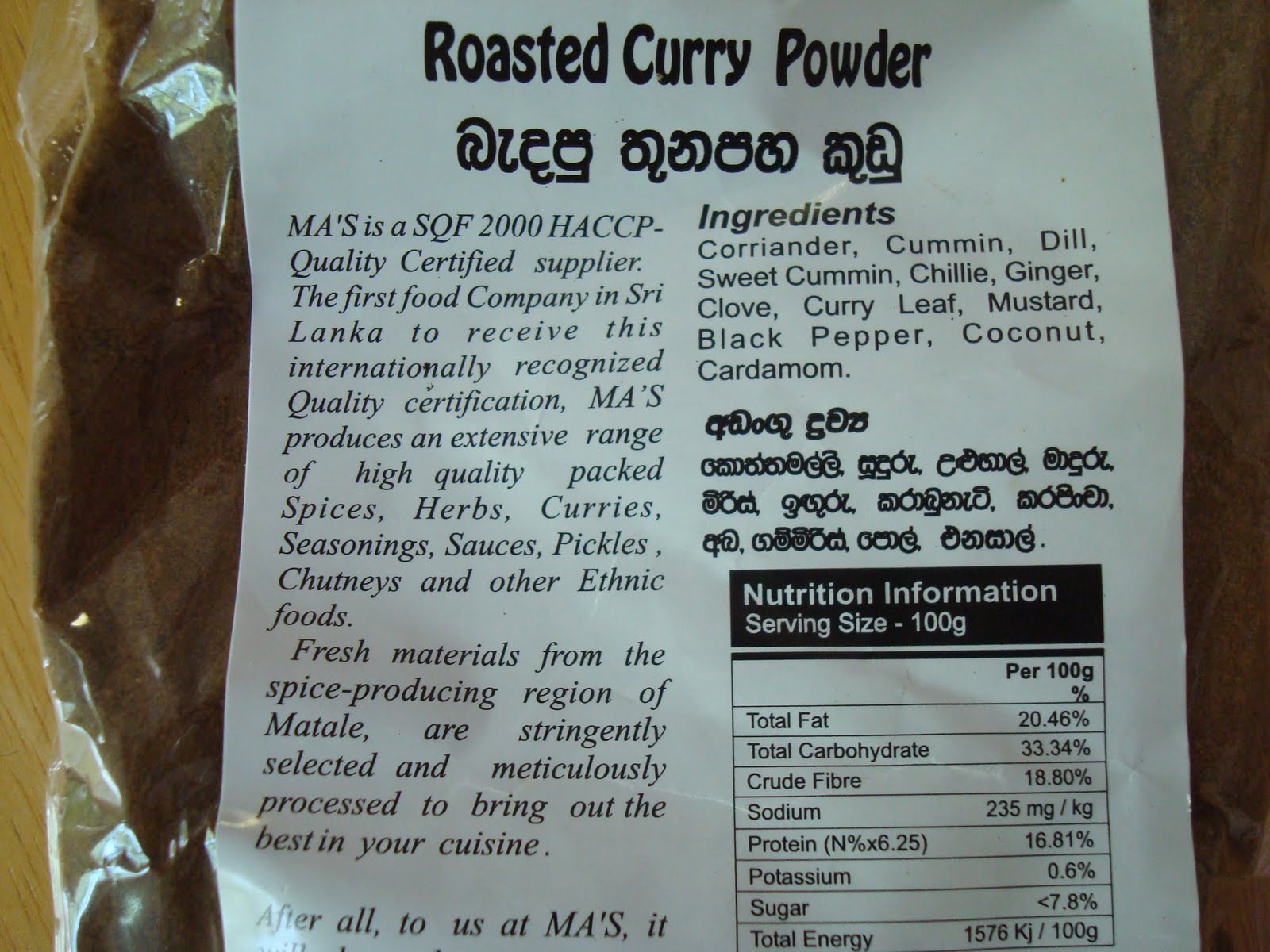
Emily, this one’s for you!  As I mentioned last Monday, Cashew Curry is my favorite dish my dear friend Migi prepares.  I've simplified the recipe since not all of us have access to curry leaves and other exotic spices and I used curry powder that Migi sends me. I think it still has the same basic (and yummy) flavor.  Here are two examples of Sri Lankan curry powder:


Although each are slightly different, both are Sri Lankan curry powders. It shows you have some leeway when making your own.  If you have a curry powder you like, by all means use it.

The only trick in the recipe is planning ahead.  The cashews should be soaked for several hours prior to starting the curry.  Just put a pound of whole raw cashews in a bowl of water to soak after breakfast.

It's that easy. What we buy as raw cashews have actually been heated to remove both their inner and outer shells so are not technically raw. This means they cannot soak as long as some other nuts and seeds.  See how plump they become?  They become sweeter as they soak, too.  Don't let them soak over six hours or they'll become slimy.

Years ago Migi explained that cashews should be soaked prior to cooking and I honestly didn’t get the “why” until reading Nourishing Traditions a few years ago. Soaking nuts and seeds before cooking makes them highly digestible as it neutralizes enzyme inhibiting phytic acid. Cashews don’t have as high a fat level as most nuts and are very high in many minerals so it's a healthy indulgence. 

Cashew Curry can be a main dish or a savory side and this recipe serves a lot and freezes well.

Sri Lankan Cashew Curry:

Soak 1 lb. whole RAW cashew in water for up to six hours.

In one tablespoon coconut oil sauté on large onion until just soft.

Add:

1 or 2 chilies, seeded and diced depending on how hot you want it.
2 cloves Garlic, minced
1 teaspoon Ginger, minced
1 teaspoon Turmeric Powder
1 teaspoon Curry Powder
½ teaspoon Salt

And continue to sauté until blended.  As the spice heat and and blend the aroma makes me so happy.

Add 2 cans (15 ounces) coconut milk.

Drain the soaked cashews and add to pot.  Bring to a simmer and cook for at least 30 minutes.  I like to simmer it an hour or so to really meld the flavors.


Serve as is over rice with a salad.  It’s an unusual side dish with grilled fish or chicken, too.  Migi serves it as one of many curries family style which is, of course, the very best way!  It's one of those dishes that tastes better the next day, too.  Enjoy!

Monday, June 6, 2011

Meatless Monday - Sri Lankan Lentils


I met my dear friend Migi over twenty years ago shortly after she arrived in California from Sri Lanka.  Migi is a skilled and generous cook and such a loving friend.  She was one of the hardest people to leave when we moved across the country.  

Our husbands met first and Keith invited us over for lunch one afternoon before Migi moved to the US. He cooked an amazing Sri Lankan spread.  I’d never had a meal quite like it and although the heat of the chilies just about did me in I was hooked.  The complex flavors of the spice mixtures, the creamy curries, the variety in each meal - it was so unlike anything I’d had before. 

We met Migi shortly thereafter and we instantly became friends.  Migi cooked nearly everything from scratch with whole food ingredients.  Sadly that was new to me at the time. I learned a lot watching her but still didn't quite get the whole lesson - it would be many years and a few health issues before I finally got it.  Her cashew curry was one she often made and is still my favorite comfort food.  The cashews are soaked for several hours prior to cooking and simmer in a coconut milk based curry – a flavorful curry but not too hot and if I could eat only one meal for the rest of my life I would be content with a bowl of basmati rice with cashew curry spooned over the top.

Sri Lankan cooking is similar to Indian but somehow lighter than most Indian food I’m familiar with. Because Sri Lankan cooking is influenced by Europeans, Indians, Arabs and others there is a wonderful mix and variety of flavors and styles.  The curries can be mild and flavorful to knock your socks off scorching.  A pot of basmati rice surrounded by chicken curry, cashew curry, lentils, curried veggies and a simple cucumber and tomato salad is a classic Migi meal.

Keith and Migi know how to entertain and their parties were relaxed afternoons full of friends and special food.  If we were very lucky she made Lampries – an entire meal of rice, Dutch meatballs, Sri Lankan curry and spicy sambols wrapped in banana leaves and steamed.  The package is opened on your plate and traditionally eaten with fingers – we did not have the dexterity and grace to manage that and used forks instead.   

What I’ve come to appreciate these last few years about Sri Lankan food is that much of it is naturally gluten free. Several years ago Migi gave me the most beautiful cookbook.  It’s The Complete Asian Cookbook by Charmaine Solomon.  Ms. Solomon is from Sri Lanka and has lived all over Asia and has chapters on India, Burma, Thailand, Vietnam, China and more.  She explains ingredients and techniques clearly as well as customs and typical meals.  It’s a wonderful book for anyone who loves any type of Asian cooking.  A bottle of gluten free soy sauce will make most of the book workable without other substitutions.

I count Migi as my Sri Lankan sister and am blessed she feels the same. When I miss her – and I often do – I tend to make lentils and rice.  Fast, easy and comforting.  Well, fast and easy because I’ve altered the recipe for weekdays.   Her version calls for lots of fresh garlic, ginger, curry leaves and other spices – this version comes together in minutes with ground powdered spices.  The spices are forgiving you really can't go wrong – add more or less heat as you prefer.

Easy Sri Lankan Lentils

In medium large saucepan over medium heat saute:

1 Cup Onion, chopped
2 Tablespoons Coconut Oil

When softened, add:

1 teaspoon Tumeric
1 teaspoon Ginger
½ teaspoon Garlic
½ teaspoon Curry Powder
½ teaspoon Salt
¼ - ½ teaspoon Cayenne Pepper
¼ teaspoon Black Pepper

Sauté until the spices are all mixed into the onions and be careful not to burn. Everything will be golden and the aroma will be wonderful.  

Add:

1 15 – 16 ounce can Coconut Milk
1 cup Water
1 cup Red Lentils (which are really orange) that have been sorted and rinsed and drained.

Simmer together for approximately 30 minutes.  Depending on your lentils you may need to add a bit more water – add about ¼ cup at a time.  

While the lentils are simmering I like to do something Migi taught me.  I sauté a cup of sliced onions in a little coconut oil until they’re really soft and just starting to turn brown and then add a half teaspoon or so of  black mustard seeds.  Give them just a minute in the pan and put a spoonful of the mixture over each serving of lentils.  They give the lentils another layer of yummy flavor.   

Serve with rice and sautéed vegetables of your choice for a healthy and flavorful meal.  We had kale from our garden with peppers and zucchini although I usually serve green beans with lentils because Migi usually does, too.